
How Water and Waste Water Treatment Works
Every plant we build starts from a laboratory analysis of the water and a study of the site, and we choose the treatment from what those show. This guide sets out the water and waste water treatment methods we choose from.
Why Treat and Recycle Waste Water?
Used water is waste water: sewage from homes, effluent from industry and commerce. Use changes it physically, chemically and biologically, and leaves it unfit, sometimes toxic, for further use.
Recycling
Demand for water keeps rising with population, industry and agriculture, but no new water is created, and nature recharges groundwater far more slowly than we produce waste water. Recycling is the only lasting answer. Treated water released into the ground recharges it faster, and treatment stops the contamination that untreated seepage causes.
STP, ETP and WTP Compared
| Sewage treatment plant (STP) | Effluent treatment plant (ETP) | Water treatment plant (WTP) | |
|---|---|---|---|
| Treats | Domestic sewage | Industrial effluent | Source water, for a specific use |
| Water characteristics | Broadly similar from site to site | Depend on the industry and its processes | Depend on the source |
| Treatment design | Standard process, sized for each site | Customised for each effluent | Customised for each use and source |
| Designed from | The domestic waste water load | The effluent’s characteristics | The intended use and the quality it requires |
| Pollution Control Board compliance | Required | Required | Depends on the application |
For a plant that is already running but under-performing, a feasibility study finds the causes and recommends the fixes.
Purification and Treatment
The right method depends on how contaminated the water is and what it will be used for.
- Water purification makes water fit for its most critical use, human consumption. The more contaminated the source, the more processes it needs.
- Water treatment brings water to the quality a particular industry or piece of equipment requires.
- Waste water treatment removes most contaminants from sewage or effluent, separates the sludge and produces water that meets Central or State Pollution Control Board limits for release. It can be treated further to any required grade.
Physical Methods
Physical purification is mainly filtration: passing water through a medium that holds back solids and insoluble particles.
Screens and Media Filters
Screens are the simplest filters. Media filters (a vessel, the media and a backwash controller) take their names from the media: sand filter, iron removal filter, activated carbon filter, water softener.
Membrane Filtration: MF, UF, NF and RO
Cross-flow filtration pushes water across a membrane. By pore size, the options are micro filtration (MF), ultra filtration (UF), nano filtration (NF) and reverse osmosis (RO). The choice depends on what must be removed and its particle size.
Cartridge Filters
Cartridge filters are made of fibres. They are most economical where contamination is below about 100 ppm, and are used as a final polishing filter for heavier loads.
Chemical Methods
The method depends on the kind of contamination.
Chemical Dosing
- Chelating agents prevent the effects of hardness.
- Oxidising agents act as a biocide or neutralise reducing agents.
- Reducing agents neutralise oxidising agents.
Clarification
Coagulant chemicals reduce the charge on suspended particles so that they gather into larger flocs. The flocs settle in a settling tank or are caught in a gravity filter.
Deionisation and Softening
Ion exchange resins in a tank absorb selected cations or anions and replace them with other ions. Exhausted resin is regenerated with suitable chemicals. A water softener is the most common ion exchanger.
Disinfection
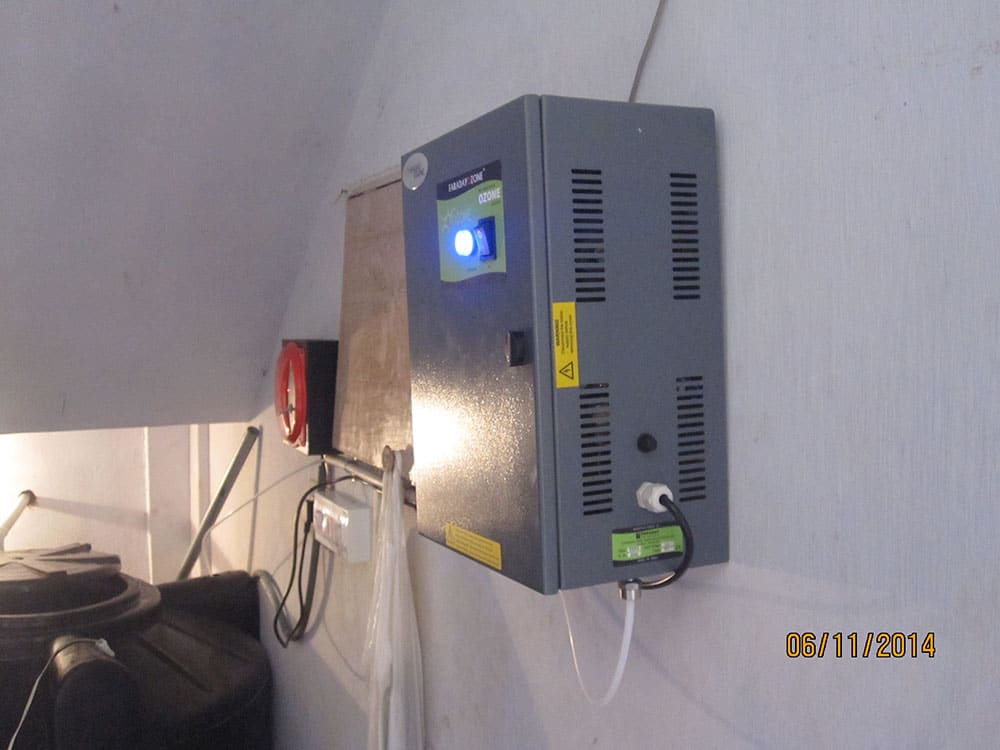
Disinfection kills harmful micro-organisms and is one of the most important steps in purification. The usual methods are chlorine, ultraviolet (UV) light and ozone.
pH Adjustment
Chemicals raise or lower the pH of the raw water to neutral (7) or between 7 and 7.5.
Advanced Oxidation Processes (AOP)
Advanced oxidation treats waste water carrying toxic and persistent organic impurities. Hydrogen peroxide, ozone or UV light produces highly reactive hydroxyl radicals in the water, and suitable catalysts speed up their production.
Biological Methods
Bacteria and other micro-organisms break down dissolved organic compounds, measured as biological oxygen demand (BOD). Aerobic systems blow compressed air or oxygen through the water; anaerobic systems work without oxygen.
Activated Sludge Process (ASP)
The activated sludge process was the most common technology for many years, and several newer processes work on the same principle.
Membrane Bio Reactor (MBR)
MBR combines a suspended-growth bioreactor with micro or ultra filtration. Developed in the late 1960s, it came into wide use for waste water from the early 1990s.
Moving Bed Bio-Film Reactor (MBBR)
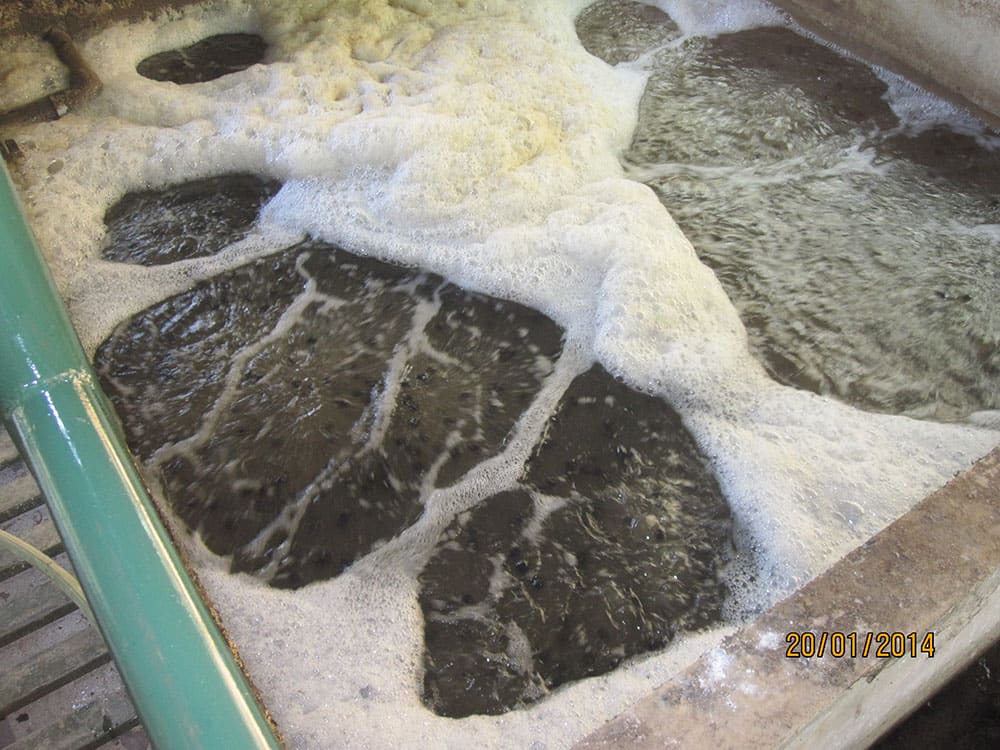
MBBR is the process we mainly use for the biological stage. It is more reliable and simpler to operate than conventional systems. Thousands of polyethylene carriers move freely in an aerated tank, and bacteria grow as a bio-film on their protected surfaces. An aeration grid at the bottom supplies oxygen and keeps the carriers mixed. Treated water leaves through a sieve that holds the carriers back. The aeration tank photograph below shows MBBR media.
Treatment Stages at Our Project Sites
- (view larger)
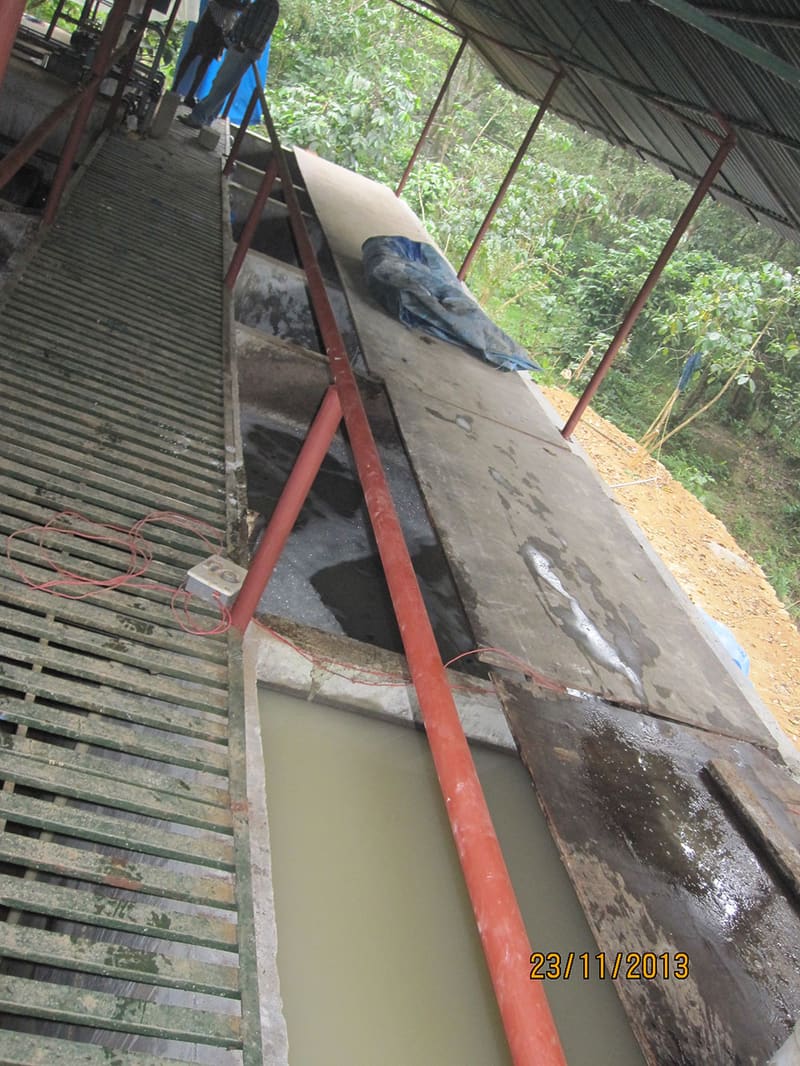
Raw waste water before treatment - (view larger)
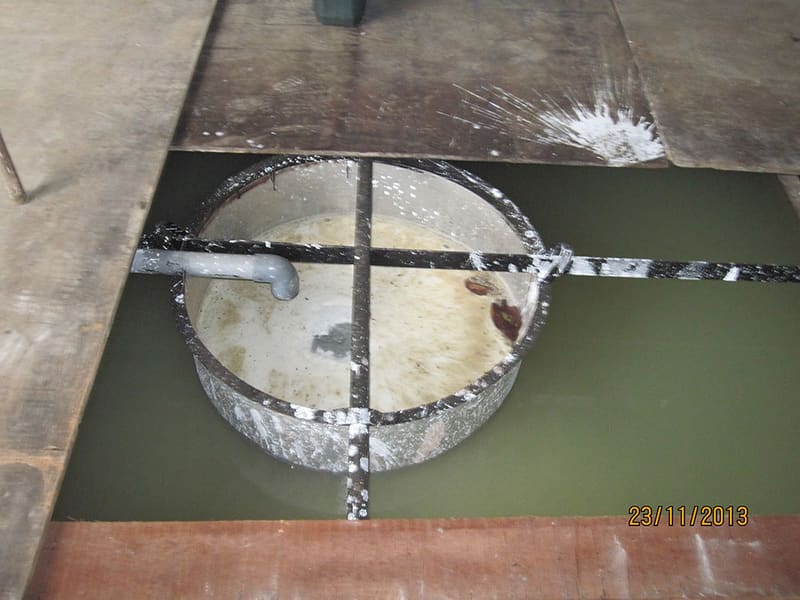
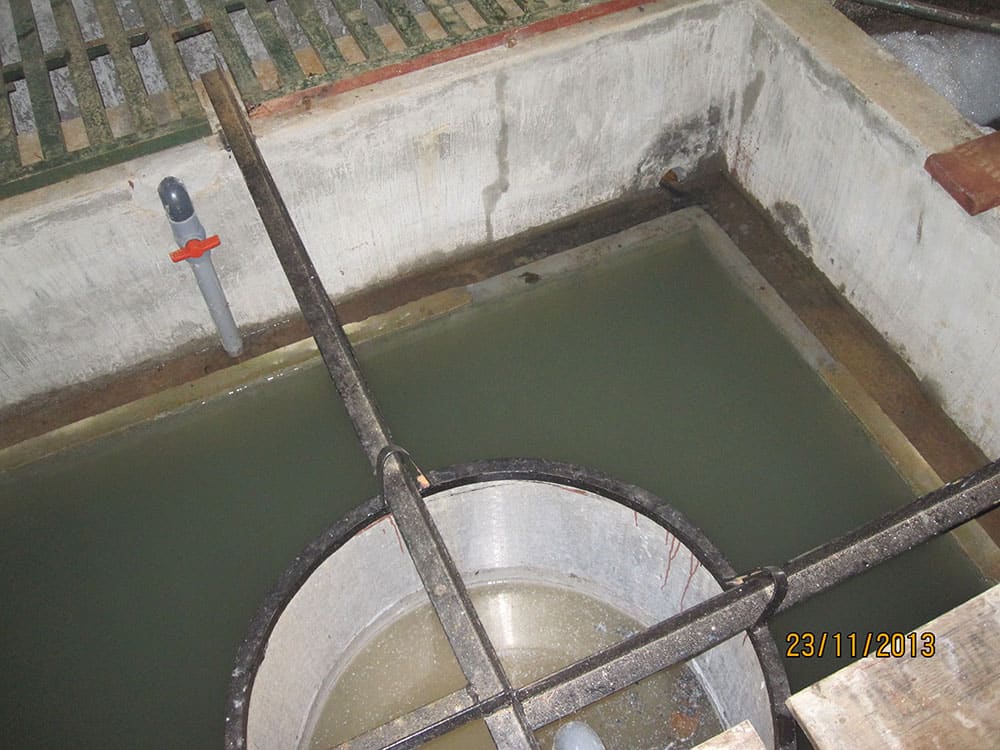
Clearer water in the primary settling tank (PST) - (view larger)
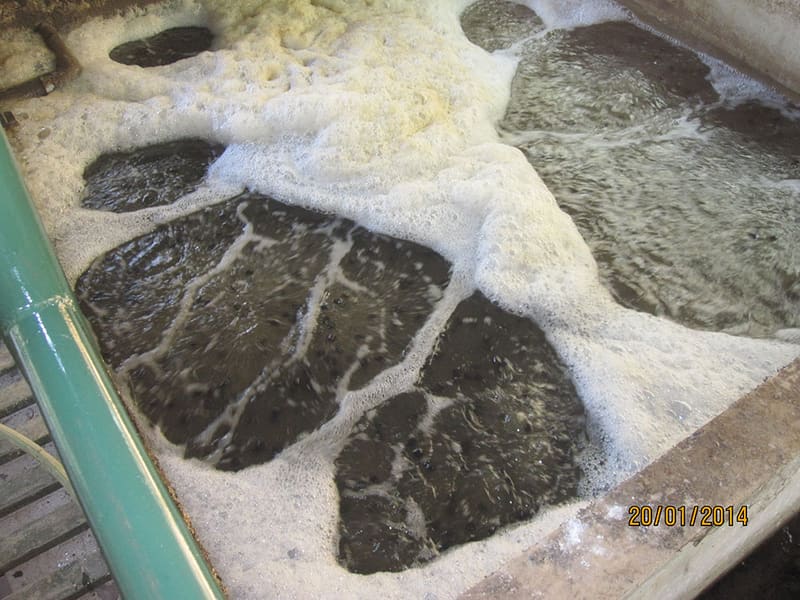
Aeration tank (MBBR media is visible in the water) - (view larger)
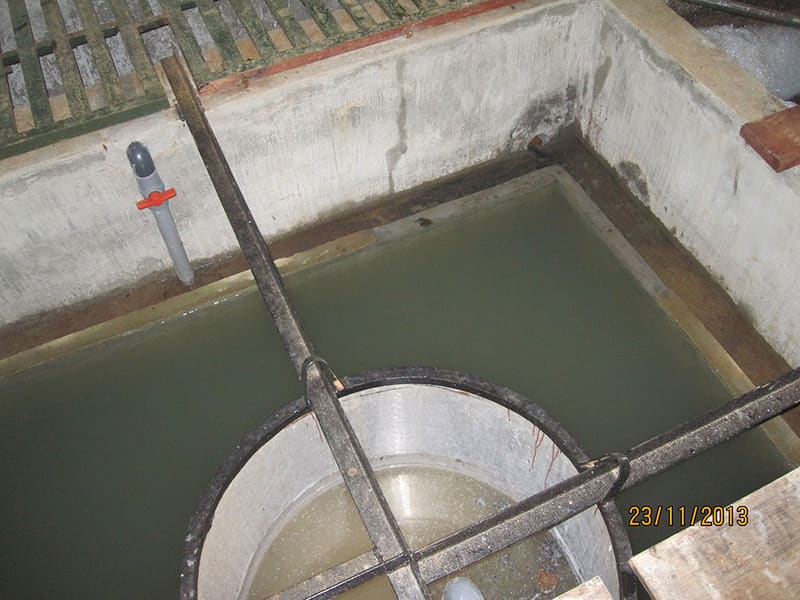
Clearer still in the secondary settling tank (SST) - (view larger)
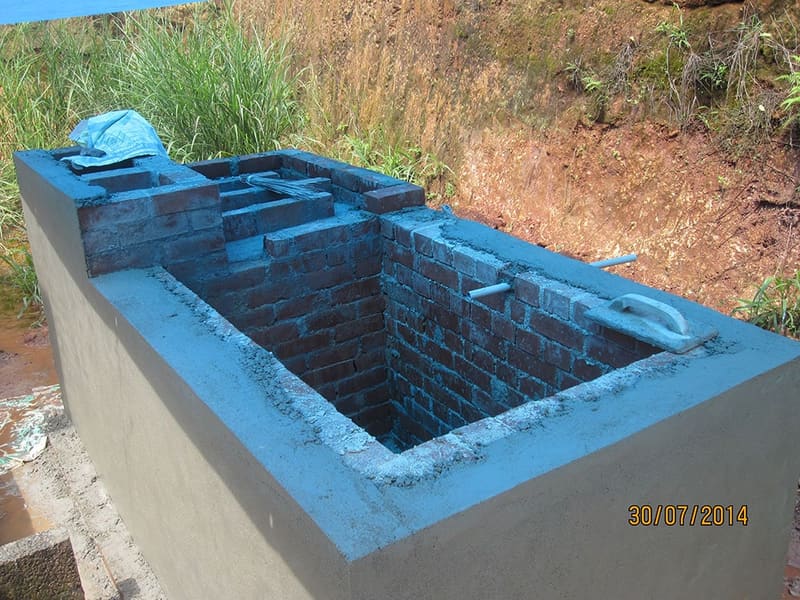
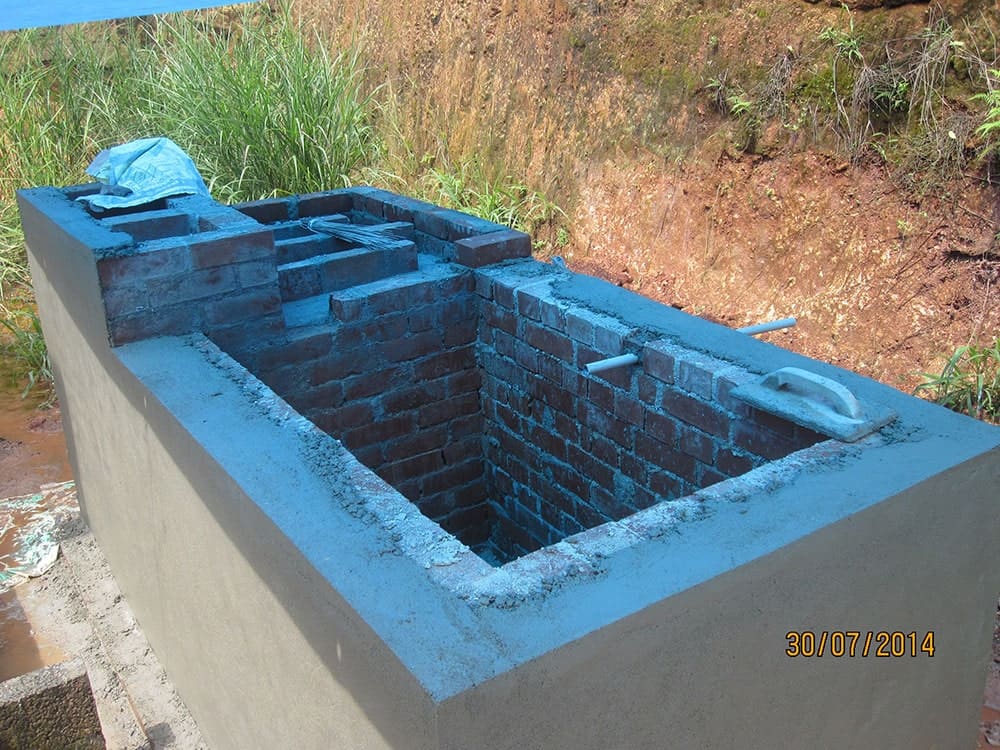
Design for coagulation, flocculation and settling, domestic purpose - (view larger)
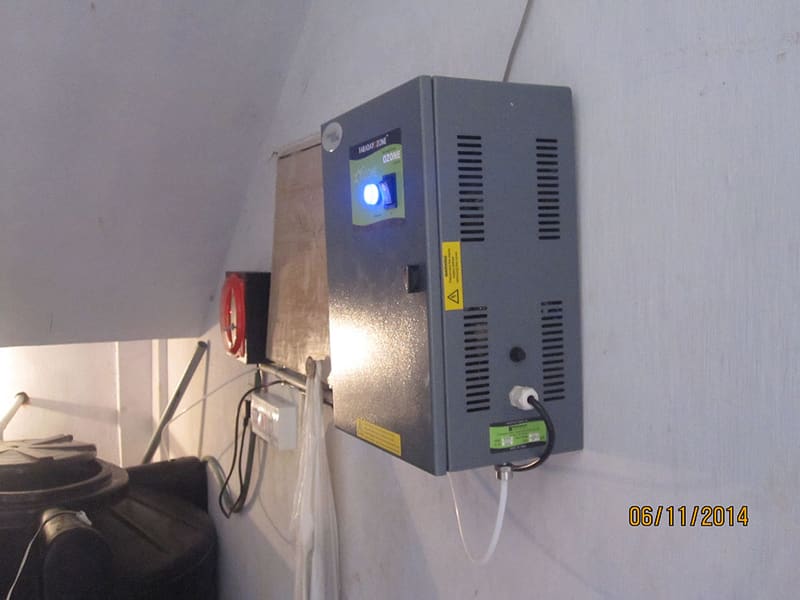
Ozone treatment disinfection, small unit
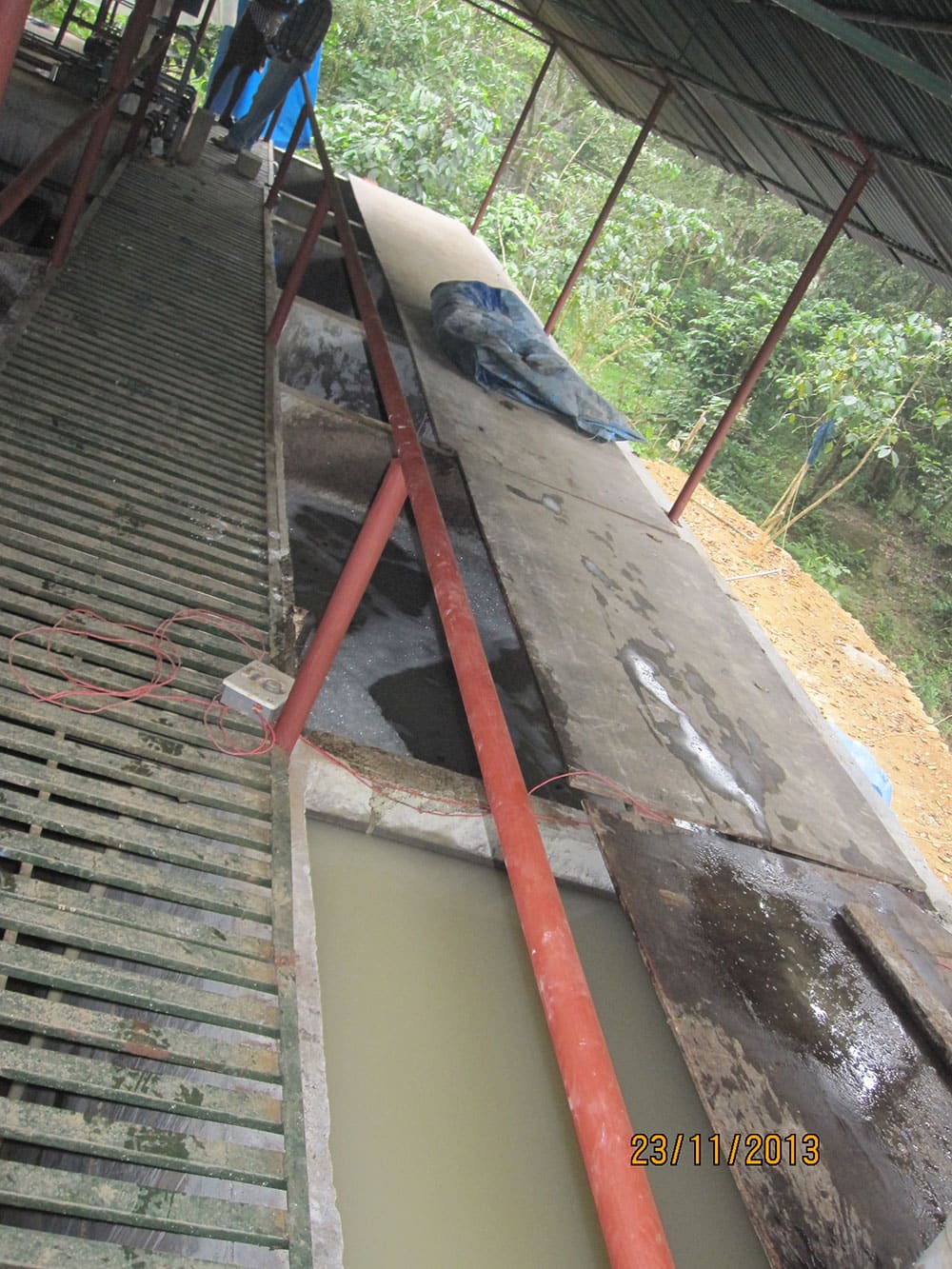
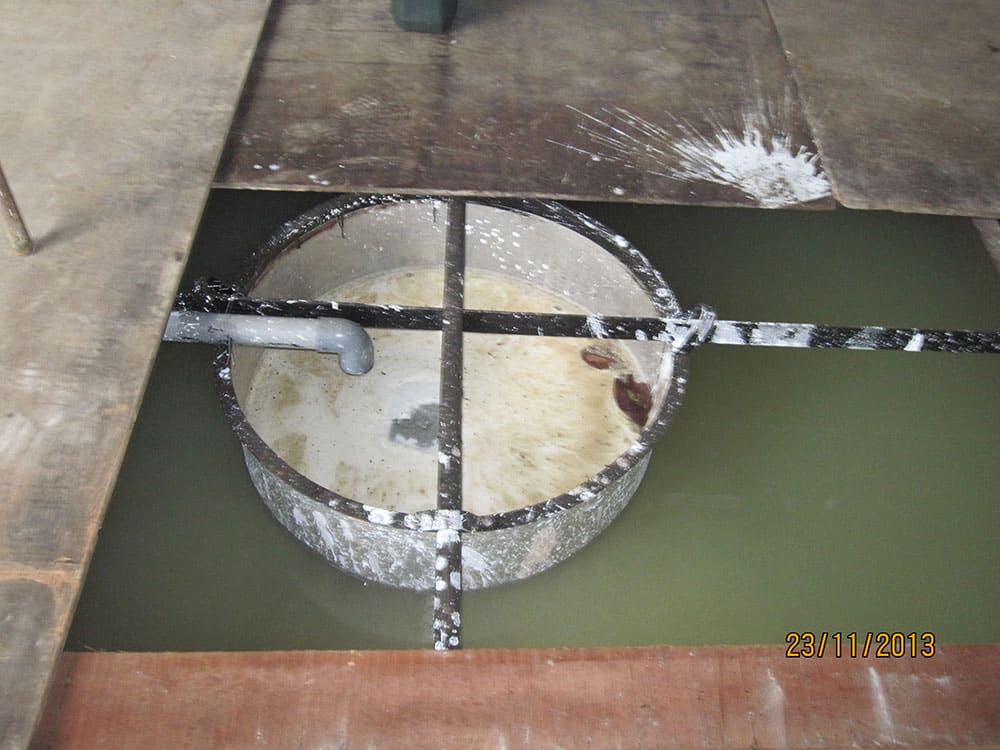
Enquiries
Tell us the type of plant, where it is and what you need.