
Effluent Treatment Plants Designed for Your Effluent
We are an effluent treatment plant (ETP) manufacturer and turn-key contractor. There is no standard ETP, so we design each one from your effluent, its flow and the discharge or reuse standard you have to meet. We work across South India from our office in Calicut (Kozhikode), Kerala.
Enlisted by the Local Self Government Department, Government of Kerala, as an ETP service provider under the Suchitwa Mission (order of 2 June 2016).
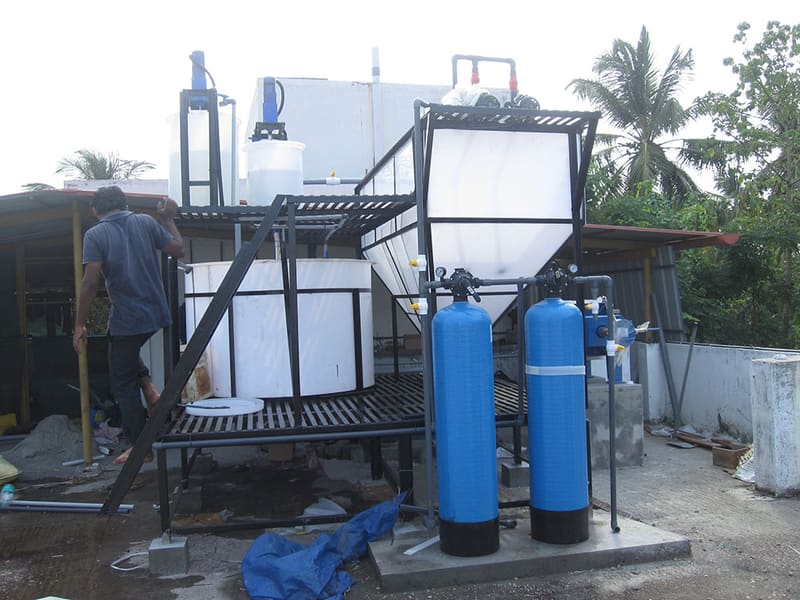
Designed for Each Effluent
Effluent is the waste water from a commercial or industrial process, such as a car wash, a gold or mineral processing unit or a factory. What it contains depends on the process. Treatment can have primary, secondary and tertiary stages, but the processes that go into each stage are decided by the effluent’s characteristics, its flow, and the discharge norm or reuse standard the client must meet. They can include:
- Clarification: coagulants gather suspended solids into flocs that settle out.
- pH adjustment towards neutral.
- Biological treatment, aerobic or anaerobic, to reduce the organic load (BOD).
- Advanced oxidation for toxic and persistent organic impurities.
- Filtration, including membrane filtration.
We mainly use the moving bed bio-film reactor (MBBR) and advanced oxidation processes (AOP).
Examples of Our ETP Work
Every ETP is designed from its own effluent. These are examples of the work:
- Automobile: vehicle service centres and car washing facilities, including Amana Toyota, the Toyota dealership with locations across north Kerala.
- Coir: the Beypore Coir Cluster (Department of Industries and Commerce, Government of Kerala).
- Business groups: the Sree Gokulam Group of Companies.
We also design ETPs for gold and mineral processing, power laundries and herbal extract units.
Reuse and Sludge
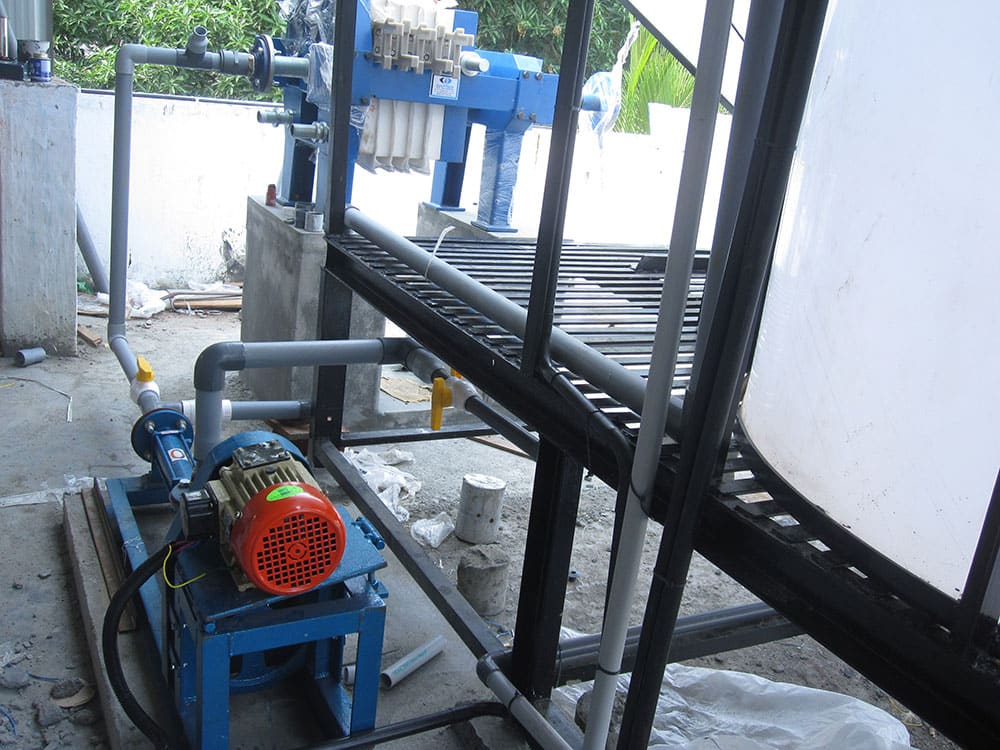
At Amana Toyota, the treated wash water goes back into use for under-body washing. We handle sludge with screw pumps and filter presses. De-watering machines are available from Futuristic Environ, the Group’s sales unit.
What a Turn-Key ETP Project Includes
- Consultancy: technical and statutory consultancy, Pollution Control Board licensing, and liaison with the State Pollution Control Board.
- Contract work: design, supply, erection and commissioning.
- Handover: fine-tuning, operator training and a Performance Certificate.
- Maintenance: the first year’s annual maintenance contract (AMC) and the trial-run consumables are included. After that we offer AMCs, spares and consumables.
Green Earth, the Group’s laboratory approved by the Kerala State Pollution Control Board, tests the effluent before and after treatment.
ETP Work at Our Project Sites
- (view larger)
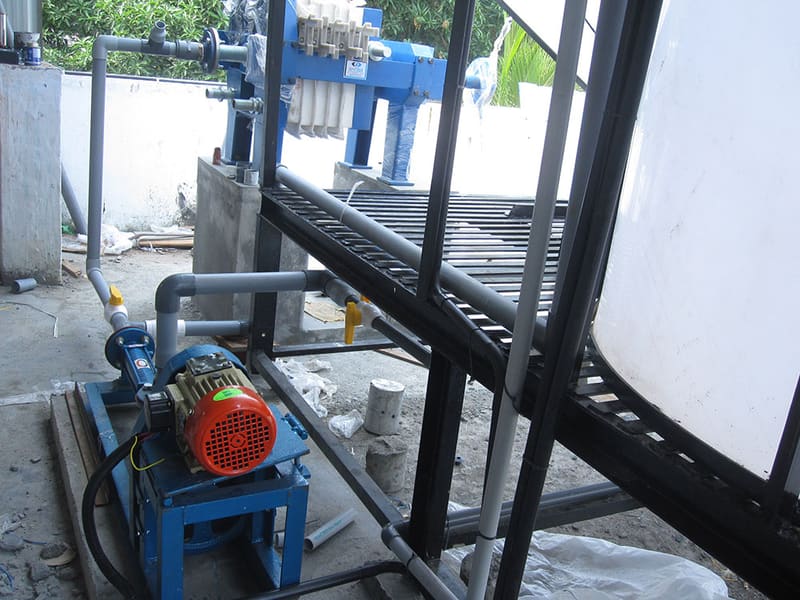
Screw pump and filter press used for ETP
Common Questions
Which Norms Must the Treated Effluent Meet?
The Central and State Pollution Control Boards set them. We design each ETP to the parameters of your State Pollution Control Board and handle the licensing and liaison with the Board on your behalf. Compliance is a statutory responsibility of both the client and the service provider.
Our ETP Is Already Running but Not Meeting the Norms. Can You Help?
Yes. Our feasibility study looks at the flow and load the plant receives, how each stage treats the effluent and where the plant stands with the Pollution Control Board, and recommends an improvement for each issue. We can also carry out the rectification.
What Do You Need from Us to Design an ETP?
The process that produces the effluent, the flow, and the norm or reuse standard you must meet. We design from the effluent’s characteristics and lay the plant out for the space on site. One of our ETPs is on a terrace.
Can the Treated Effluent Be Reused?
It can, depending on the effluent and what the water is reused for. One of our ETPs returns treated vehicle-wash water for under-body washing.
Enquiries
Tell us the type of plant, where it is and what you need.